Overview
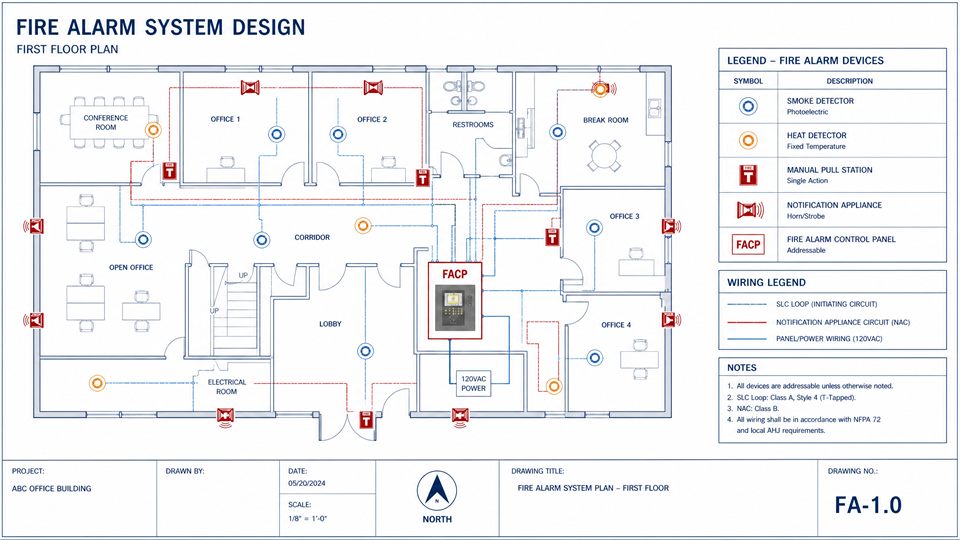
A fire suppression system is an engineered system that is usually connected to a fire alarm system. When detectors such as heat detectors, smoke detectors, or fusible links detect a fire, the system automatically releases suppression agent to suppress the fire.
The suppression agent works by removing at least one of the three elements required for combustion: heat, fuel, or oxygen.
Suppression Agent Types
- Clean Agent SystemsClean agent systems leave no residue and do not damage sensitive electronics. They are commonly used in museums, archives, libraries, computer rooms, data rooms, and similar spaces.
- Carbon Dioxide (CO2)CO2 is a gaseous agent that works quickly and efficiently, but it can be dangerous to human health. It is commonly used in unoccupied environments.
- Dry Chemical SuppressionDry chemical suppression quickly extinguishes fires caused by combustible or flammable liquids. It is commonly used in furnace rooms, flammable liquid storage areas, mechanical rooms, and other industrial settings.
- Wet Chemical SuppressionWet chemical suppression uses liquid substances and helps prevent re-ignition. It is commonly used in kitchens to fight burning cooking fats and oils.
- Water Mist SystemsWater mist systems spray fine droplets of water that absorb heat and lower oxygen around the fire. They use less water than traditional sprinkler systems, making them suitable for areas where water damage is a concern.
- Foam SystemsFoam suppression systems are designed to smother fires involving flammable liquids, such as gasoline or oil. They are commonly used in aircraft hangars and chemical plants.
Code Requirements
Fire Code Requirements
- 6.6.1.1. Testing, Inspection and Maintenance: A special fire suppression system that meets the description given in any one of the standards referenced in Article 2.1.3.5. shall be tested, inspected and maintained in conformance with the appropriate requirements of that standard.
NFPA Requirements
- All suppression systems are required to be tested every 6 months.
- Wet Chemical Systems: NFPA 17A.
- Dry Chemical Systems: NFPA 17.
- Foam Systems: NFPA 16 for foam water systems and NFPA 11 for high volume expansion foams. These systems are used to protect liquid fire hazards.
- Carbon Dioxide Systems: NFPA 12.
- Halon Systems: NFPA 12A. Halon was banned in the late 1980s.
- Clean Agent Systems: NFPA 2001.
- Automatic Water Mist Systems: NFPA 750.
- As of 2025, 3M stopped producing FM-200. It was replaced with Novec 1230 and Fike SF1230.
What We Provide
- Semi-annual and annual suppresion inspection.
- Fast turnover inspection reports.
- Update Service tag.
- replacement of fusible links, nozzle.
- replacement of CO2 cartrige.
- Testing of control panel or fire alarm panel.
- Recharge empty tanks.
- Deficiency repairs.
- Provide signage if missing.
- Design and Installation.